

Co-living operators could thrive even as property curbs, regulations crimp rental market
They offer a way to invest in property and benefit from rental income, without having to deal with the restraints on short to mid-term stays

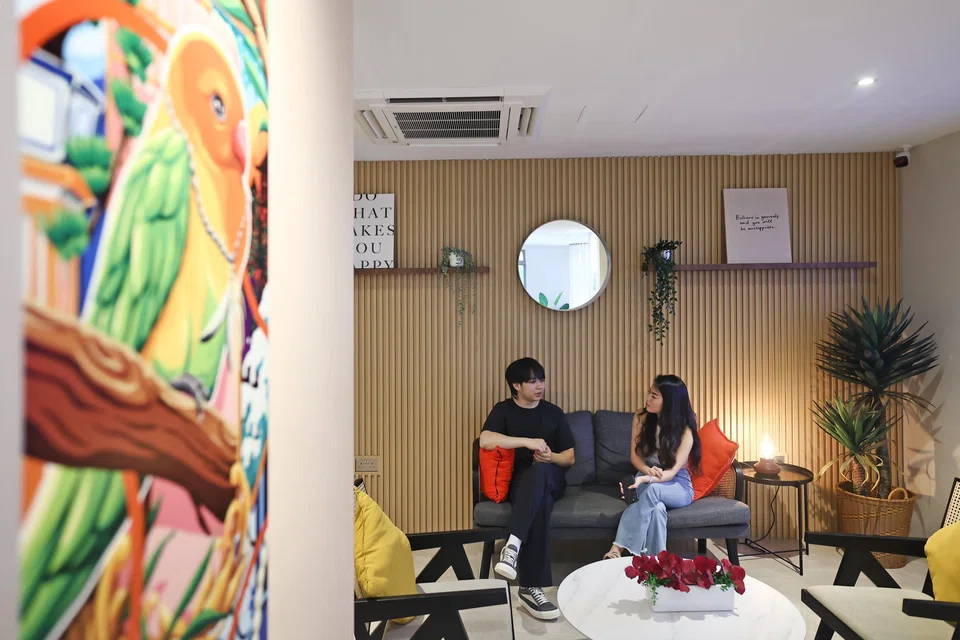
[SINGAPORE] It used to be a sure thing: Get an investment property and generate passive income through rentals.
But there are restrictions on short-term rentals in private properties and Housing & Development Board flats – and there is no “Airbnb” option.
Property cooling measures, such as the additional buyer’s stamp duty, have also made investors think twice about acquiring investment properties to generate income through rentals or capital appreciation.
In addition, rental prices have been moderating.
The Urban Redevelopment Authority (URA) on Jan 23 announced that rents for private residential properties decreased by 0.5 per cent in the fourth quarter of 2025, compared with a 1.2 per cent increase in the previous quarter.
For the whole of 2025, rents for private residential properties increased by 1.9 per cent, compared with a 1.9 per cent decline in 2024.
Leonard Tay, head of research for Knight Frank in Singapore, expects rental growth to “remain moderate” at around 1 to 3 per cent this year.
However, he warned that landlords are “growing wary and defensive” in the leasing market, as uncertainty in the job market and concerns over higher costs of living could reduce Singapore’s appeal to foreign professionals, who make up a big part of the rental market.
To be clear, the property measures and related restrictions are very much necessary – although not great for investors.
If only there were a way to invest in property and benefit from the rental income, without having to deal with the restraints on short to mid-term stays.
It appears there is. And this could explain, in part, the excitement in the market over a couple of new public listings in the co-living space.
Two research houses, KGI Securities Singapore and Tickrs Financial Singapore, earlier this week initiated coverage on The Assembly Place – even before the community living operator sounded the gong for its listing on the Catalist board on Jan 23.
Apart from co-living, the company also operates hotels and service apartments, students’ accommodation, foreign healthcare professionals’ accommodation and intergenerational living facilities.
KGI has an “outperform” call on The Assembly Place with a target price of S$0.35, while Tickrs has a “buy” recommendation with a S$0.34 target.
The analysts, though, may soon have to revise their reports.
Shares of The Assembly Place raced to S$0.31 at the opening bell – some 34.8 per cent above its initial public offering (IPO) price of S$0.23 a share – before settling to close at S$0.29 on its first day of trading.
The buzz over The Assembly Place’s IPO has also spread to co-living peer Coliwoo, which made its debut on the mainboard of the Singapore Exchange in November 2025.
Over the past two weeks, four brokerages – DBS, Maybank, RHB and CGS International – have initiated coverage on Coliwoo with “buy” calls and target prices ranging from S$0.74 to S$0.88.
This represents a potential upside of up to 43.1 per cent for Singapore’s leading co-living operator, whose shares closed at S$0.615 on Jan 23.
For investors, the allure of co-living is clear: It fills a clear gap by serving foreign students and foreign professionals working in Singapore – a community which DBS analysts estimate to be “over 400,000 residents and growing”.
Ironically, regulations – the bane of private property investors – could benefit the co-living operators.
In a Jan 22 report, DBS analysts Geraldine Wong and Derek Tan said the latest housing policies “place higher barriers of property ownership for foreigners, which in turn is driving (rental and co-living) demand structurally higher”.
Meanwhile, KGI analysts Alyssa Tee and Chong Ting Shuo in a Jan 22 report noted that the URA’s three-month minimum-stay framework and pilot on long-stay serviced apartments “continue to legitimise intermediate-term housing, structurally supporting the co-living sector”.
At the same time, government-linked initiatives, including healthcare workers accommodation contracts with MOH Holdings and demographic-specific tenders under the Singapore Land Authority, provide “demand visibility and institutional validation”, they added.
TRENDING NOW

Once staunchly pro-China, Malaysian Chinese businesses are now distancing themselves from Beijing

Looking beyond looming CEO succession, should UOB potentially pursue a transformative merger?

Could stablecoins be the future of money?

Grab CEO’s wife Chloe Tong on life with Anthony Tan and finding her purpose

